

- 8 October 2026
- by samuelaustin
- Uncategorised
Early September saw an important milestone for zoo hoof care, as professionals from across the zoological community came together at Denver Zoo Conservation Alliance in Colorado for the first ever Zoo Hoofstock Trim Program (ZHTP) Exotic Hoof & Nail Conference.
The inaugural conference was dedicated entirely to hoof and nail health in zoo animals, bringing together keepers, veterinarians, managers and hoof-care specialists to share knowledge, practical experience and the latest thinking in preventative care.
For us at Red Horse Products, it was particularly exciting to be there. Our roots are firmly in equine hoof care, but over the years our products have increasingly found their way into zoological collections and into the toolkits of professionals caring for a much wider variety of species. Seeing hoof care given this level of focus within the zoo community felt like a significant step forward.
Why hoof care matters in zoos
Healthy feet are fundamental to the wellbeing of any animal, but caring for the feet of zoo species presents some very different challenges to those encountered with domestic horses.
In the wild, hoofed animals may naturally cover significant distances over varied terrain. Animals in managed environments do not necessarily experience the same degree of natural hoof wear. Hoof overgrowth can develop gradually and may go unnoticed for a long time, with prolonged imbalance potentially contributing to more serious problems in the distal limb. Preventative assessment and regular maintenance therefore have an important role to play.
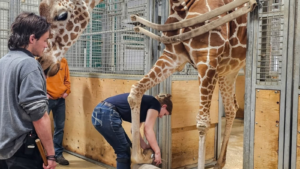
And when your patient happens to be a giraffe, rhinoceros or elephant, even relatively routine foot care suddenly involves some considerable logistical challenges. That is what makes the work of ZHTP so interesting. It combines an understanding of hoof anatomy and biomechanics with practical trimming skills, animal behaviour, veterinary medicine and carefully developed husbandry techniques. A key concept was on the development of ‘voluntary hoof-care’ where an animal has been carefully trained to participate in the procedures required for regular foot care. Inspiring to see giraffe offering their feet to curl on the box – especially when you consider many of our domesticated equines are often not so compliant with the farrier.
From ungulates to rhinos and elephants
The Denver conference deliberately went beyond traditional hoofstock. The programme encompassed ungulates, rhinoceroses and elephants, with presentations including case studies, current research, professional discussions and shared experiences from people working directly with these animals.
One of the most valuable aspects of an event like this is the opportunity to bring different disciplines together.
Zoo keepers know the individual animals and their behaviour intimately. Veterinarians contribute diagnostic and medical expertise. Hoof-care specialists bring an understanding of trimming, balance and foot function. Researchers add an evidence base that can challenge existing assumptions.
Put those perspectives in the same room and some extremely useful conversations begin to happen.
Moving from treatment to prevention
Perhaps the biggest theme underlying the work of ZHTP is a familiar one for those of us working in equine hoof care: do not wait for a foot to become a major problem before paying attention to it.
ZHTP’s approach places considerable emphasis on awareness, routine assessment and preventative hoof maintenance. The organisation has spent the past decade developing protocols and training programmes designed to help zoo staff recognise problems earlier and develop the practical skills required to manage them.
That philosophy closely mirrors our own experience at Red Horse Products.
Many of the most successful approaches to horse hoof care involve creating and maintaining a healthy environment before significant deterioration occurs. Regular cleaning, monitoring frogs and sulci, managing moisture levels appropriately and addressing small pockets or defects early can all make a substantial difference.
The species may change, but many of those basic principles remain surprisingly familiar.
Red Horse Products in the zoo hoof-care world
Seeing Red Horse Products included within the equipment recommended by ZHTP is something we are extremely proud of. Red Horse Products appear on ZHTP’s published hoof-care tool list alongside the specialist trimming, grinding and hoof-repair equipment used during its training programmes.
It represents an evolution we could not really have imagined when Red Horse began back in 2006.
Our first products, including Hoof-Stuff and HoneyHeel, were originally developed to solve problems we were experiencing with horses at home. Twenty years later, those products — alongside newer additions such as Artimud and Sole Cleanse — are being used not just on horses around the world, but within zoological environments too. Hoof-stuff, Artimud and Honeyheel are regularly used in the care of Giraffe, Zebra, Elephant and Rhino hooves and Honeyheel for skin support on a particularly accident prone Rhino! everal case sudies included the use of Hoofstuff for supporting recovery of Girraffe’s hoof capsules following abcesses.
There is something rather special about seeing a product originally developed for a horse’s hoof sitting among the tools used by professionals caring for some of the world’s most remarkable animals.
Sharing knowledge across species
One of our biggest takeaways from Denver was just how valuable cross-species collaboration can be.
A farrier may look at a foot slightly differently from a zoo keeper. A vet may approach a problem from another angle again. Someone who has spent years working with giraffes may have developed techniques that prompt a new idea for somebody caring for antelope, while developments in equine hoof care can potentially provide useful tools and concepts for zoo professionals.
The inaugural ZHTP conference provided a dedicated forum for those conversations to happen.
Denver Zoo Conservation Alliance deserves particular recognition for hosting the event, while ZHTP has created something that feels capable of becoming an important fixture in the zoo professional calendar.
A very encouraging first conference
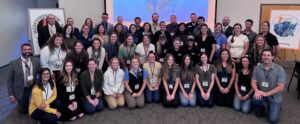
For a first event, the ZHTP Exotic Hoof & Nail Conference demonstrated just how much knowledge, experience and enthusiasm there is surrounding this increasingly specialised area of animal care.
More importantly, it reflected a change in emphasis: from simply dealing with severely overgrown or compromised feet when problems arise, towards monitoring, prevention, routine maintenance and long-term soundness.
For Red Horse Products, it was a privilege to be part of the inaugural conference and to meet some of the people helping to develop that approach.
We returned from Denver with plenty of new ideas, some fascinating conversations and an even greater appreciation for the people tasked with looking after hooves that are considerably larger — and occasionally rather harder to reach — than the ones we normally encounter.
Here’s to the first ZHTP conference — and hopefully the first of many.
Please visit the ZHTP website for more information on their courses and case studies https://www.zhtp.org/courses